
 Care zombi ești?
 Bătălie de zombi
 Fugi de ei
 Colecție de cărți
 Limbă: Română
 Hrănește hoarda (borcanul de bacșișuri)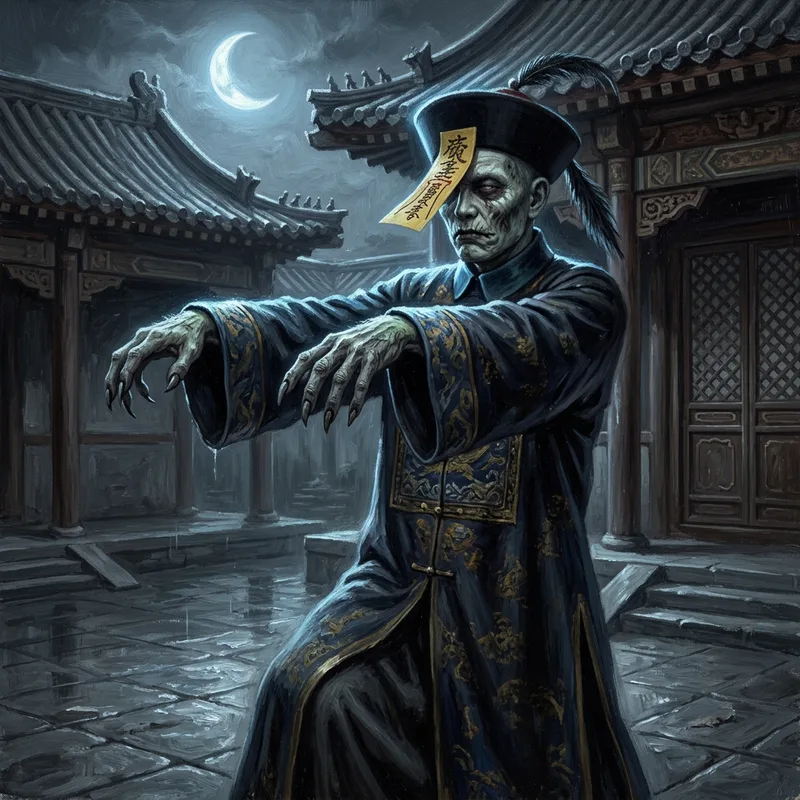
Jiangshi
The jiangshi is the reanimated corpse of Chinese folklore, a rigid body driven by the residue of its own soul to attack the living and drain their vital energy. It was described in detail by Qing-dynasty writers and explained by the Dutch sinologist J. J. M. de Groot through the Chinese dread of delayed burial and exposed corpses. Hong Kong cinema of the 1980s turned it into the hopping, talisman-stuck figure known worldwide. Mindless, physically decayed and stopped only by ritual or force, it is East Asia's main native counterpart to the zombie.12
- a paper talisman (fulu) fixed to the forehead
- peach wood
- mirrors
- a rooster's crow
- glutinous rice
- black dog's blood
- fire
- seven jujube stones nailed into the back (Yuan Mei)
- holding one's breath, since it is blind and tracks by breathing
- a raised door threshold
Când a apărut prima dată?
 1789
1789Discussed in Ji Xiaolan's Yuewei Caotang Biji (c. 1789-1798) and Yuan Mei's Zi Bu Yu
Ce spun sursele
Folklore describes greenish-white skin, sometimes furred with mould, and anything from fresh rigor to advanced decay12
It kills with brute strength and absorbs its victims' qi; blood-drinking is a modern borrowing from Western vampires12
Ai putea să-l întreci?
Clasa de viteză după cum descriu sursele (sare), nu o măsurătoare.


Surse
Fiecare fapt de pe această pagină provine din aceste surse, scris cu cuvintele noastre. Ai găsit o greșeală? Scrie-ne la [email protected].
 Ro-langs
 Xiangxi walking corpses
 Zombi (Haitian)
 Strigoi
 Vampir (South Slavic)
 Abhartach
 Arnold Paole
 Churel