
 Kurš zombijs esi tu?
 Zombiju cīņa
 Aizbēdz no tiem
 Kartīšu kolekcija
 Valoda: Latviešu
 Pabaro baru (dzeramnaudas burka)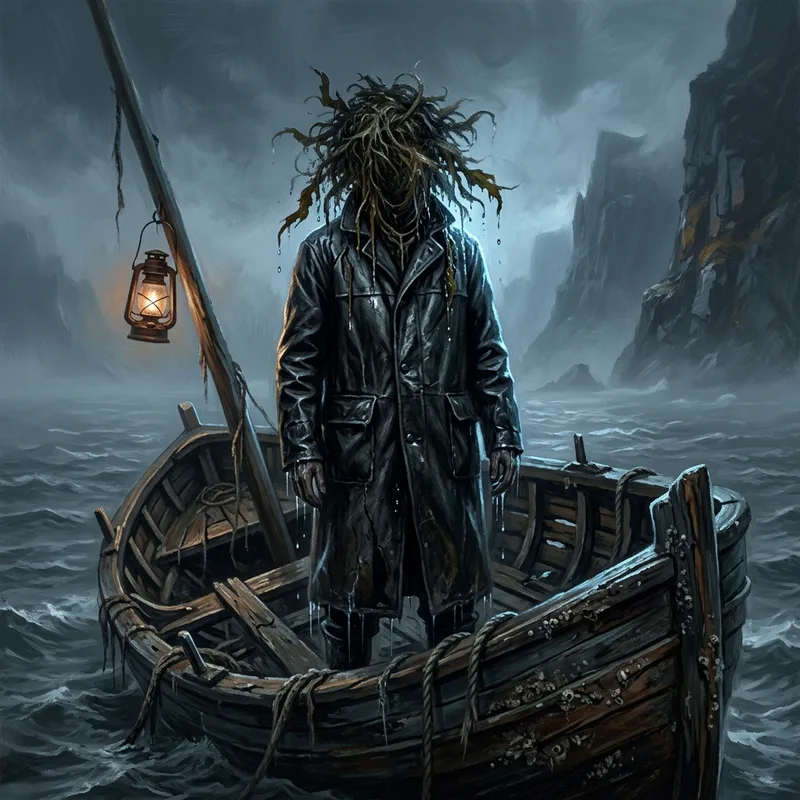
Sea draug
In post-medieval Norway the word draug narrowed from any walking corpse to the dead of the sea. The sea draug is the body of a drowned fisherman, headless or seaweed-headed, crewing half a boat and announcing the death of anyone who sees it. A well-known northern legend has it chased through a churchyard by the properly buried dead. It shows how the saga revenant survived by attaching itself to the commonest violent death of a fishing society.1
- the churchyard dead, who in one legend drive it off with coffin boards and seaweed
Kad tas pirmoreiz parādījās?
 1741
1741Hans Egede mentions 'the Drow' (drauen) as a sea spectre in a book published in 1741
Ko saka avoti
Wears a fisherman's leather or oilskin clothing and has a bundle of seaweed where its head should be1
Seeing it, or its half-boat, foretells drowning1
The belief is strongest in northern Norway, where fishing deaths were common1
The coat of arms of Bø in Nordland shows its half-boat1
Households left out food and 'draug-beer' at Christmas for it and other visitors1
Vai tu spētu tam aizbēgt?
Ātruma klase pēc avotu aprakstiem (atšķiras), nevis mērījums.


Avoti
Katrs fakts šajā lappusē nāk no šiem avotiem, pārstāstīts mūsu vārdiem. Pamanīji kļūdu? Raksti mums uz [email protected].
 Draugr
 Gjenganger
 Haugbúi
 Hjaðningavíg
 Kárr the Old
 The völva of Baldrs draumar
 Jiangshi
 Zombi (Haitian)
 Strigoi
 Vampir (South Slavic)
 Abhartach
 Arnold Paole