
 Kurš zombijs esi tu?
 Zombiju cīņa
 Aizbēdz no tiem
 Kartīšu kolekcija
 Valoda: Latviešu
 Pabaro baru (dzeramnaudas burka)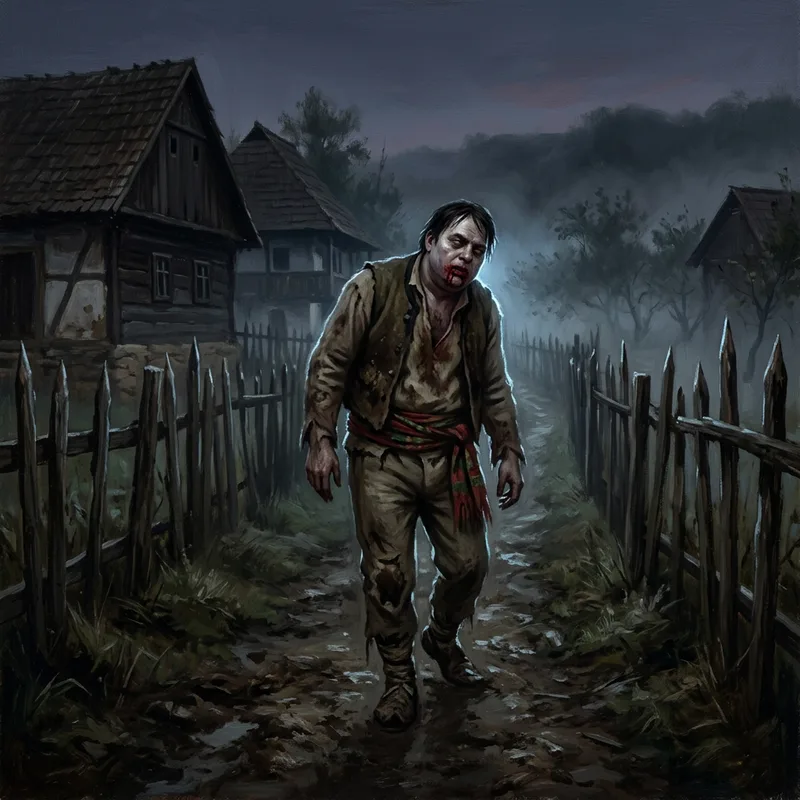
Lieta nr. 045 no 446
Vampir (South Slavic)
Saukts arī par: вампир, vampir, vukodlak
The vampir of the Balkans is the original vampire, and in its folk form it is a walking corpse and not a caped aristocrat. It rises from a neighbour's grave, takes forty days to become solid and preys on its family and village until the body is staked, beheaded or burned. Austrian officials documented the belief in occupied Serbia in the 1720s and 1730s, and the word spread across Europe. It is included here as the base tradition from which the literary vampire and the plague-like walking dead both descend.12
Pirmais pieraksts
1725
Brought to European attention by the Austrian reports from Serbia of 1725 and 1732Izcelsme
South Slavic (Serbian, Bulgarian, Croatian, Bosnian)
Serbija, Bulgārija, Horvātija, Bosnija un HercegovinaKas to izraisa
Slikta nāve vai apbedījums
A bad life, a bad death or a flawed burial; an animal or bird passing over the corpse was a classic trigger.Kā tu tāds kļūsti
Sorcerers, suicides, the excommunicated, the improperly buried and people born with a caul, teeth or a tail were at risk; so was any corpse an animal had stepped over.
Inteliģence
Nedaudz inteliģences
Vājās vietas
- a stake, in Bulgaria an iron one, through the heart
- beheading
- burning
Kad tas pirmoreiz parādījās?
 1725
1725Brought to European attention by the Austrian reports from Serbia of 1725 and 1732
lauka piezīmes
Ko saka avoti
Avoti
Katrs fakts šajā lappusē nāk no šiem avotiem, pārstāstīts mūsu vārdiem. Pamanīji kļūdu? Raksti mums uz [email protected].
 Arnold Paole
 Peter Plogojowitz
 Jure Grando
 Kozlak
 Mhachkay
 Pijavica
 Jiangshi
 Zombi (Haitian)
 Strigoi
 Abhartach
 Churel
 Nachzehrer