
 Kurš zombijs esi tu?
 Zombiju cīņa
 Aizbēdz no tiem
 Kartīšu kolekcija
 Valoda: Latviešu
 Pabaro baru (dzeramnaudas burka)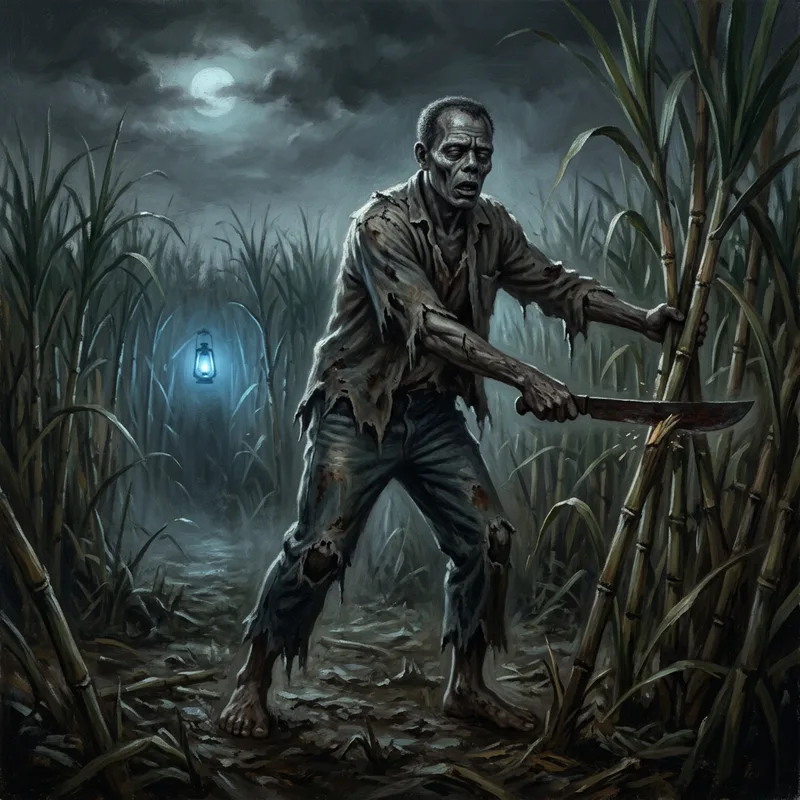
Zombi (Haitian)
The zombi of Haitian folklore is a dead or seemingly dead person taken from the grave by a sorcerer and kept as a slave without will. The word comes from Central African languages, and the belief was shaped by the plantation slavery of colonial Haiti, where death was supposed to be the one escape from forced labour. Researchers have proposed drugs, mental illness and mistaken identity to explain reported cases, and none of these accounts is settled. This figure, a body that works and obeys but is no longer a person, is the origin of the word and the concept behind every later zombie.12
- salt or salt water, which is said to wake it or release it
- preventive burial: laying the corpse face down, filling the mouth with earth or sewing the lips shut
- sesame seeds scattered on the grave to keep the spirit counting
Kad tas pirmoreiz parādījās?
 1750
1750The word is first recorded in English in the 18th century; the belief took shape in colonial Saint-Domingue under slavery
Ko saka avoti
Vai tu spētu tam aizbēgt?
Ātruma klase pēc avotu aprakstiem (vilkties), nevis mērījums.


Avoti
Katrs fakts šajā lappusē nāk no šiem avotiem, pārstāstīts mūsu vārdiem. Pamanīji kļūdu? Raksti mums uz [email protected].
 Clairvius Narcisse
 Felicia Felix-Mentor
 The Lancet zombi cases (FI, WD and MM)
 Jiangshi
 Strigoi
 Vampir (South Slavic)
 Abhartach
 Arnold Paole
 Churel