
 Kurš zombijs esi tu?
 Zombiju cīņa
 Aizbēdz no tiem
 Kartīšu kolekcija
 Valoda: Latviešu
 Pabaro baru (dzeramnaudas burka)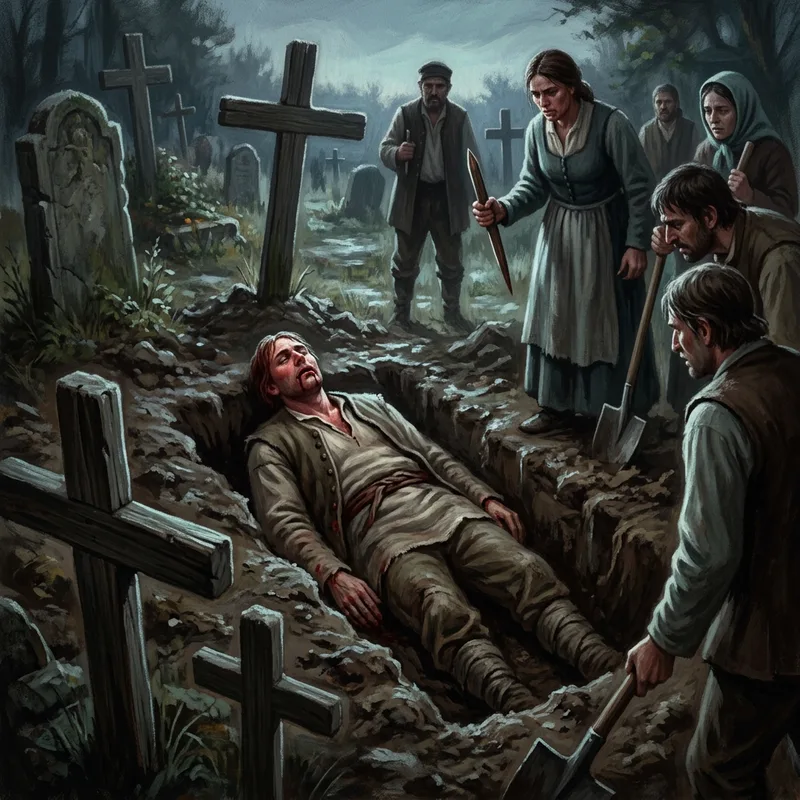
Lieta nr. 044 no 446
Peter Plogojowitz
Saukts arī par: Petar Blagojević, Петар Благојевић
Peter Plogojowitz is one of the best documented cases of a village destroying a suspected walking corpse. After a run of sudden deaths in Kisilova in 1725, the villagers forced the local Austrian administrator to witness the exhumation, staking and burning of the dead man. His report was printed in the Vienna paper Wienerisches Diarium and reprinted across Europe. Together with the Arnold Paole affair it launched the 18th-century vampire debate, and the 'signs' he described are now understood as normal decomposition.12
Pirmais pieraksts
1725
Report by the Austrian Imperial Provisor Frombald, 1725Izcelsme
Serbian
SerbijaKas to izraisa
Nekad nav izskaidrots
The villagers gave no cause; they simply identified the dead man as the source of the deaths.Vājās vietas
- a stake through the heart
- burning the body
Kad tas pirmoreiz parādījās?
 1725
1725Report by the Austrian Imperial Provisor Frombald, 1725
lauka piezīmes
Ko saka avoti
Avoti
Katrs fakts šajā lappusē nāk no šiem avotiem, pārstāstīts mūsu vārdiem. Pamanīji kļūdu? Raksti mums uz [email protected].
 Vampir (South Slavic)
 Arnold Paole
 Jiangshi
 Zombi (Haitian)
 Strigoi
 Abhartach
 Churel
 Nachzehrer