
 Siz hansı zombisiniz?
 Zombi döyüşü
 Onlardan qaç
 Kart kolleksiyası
 Dil: Azərbaycanca
 Ordunu doyurun (bəxşiş qabı)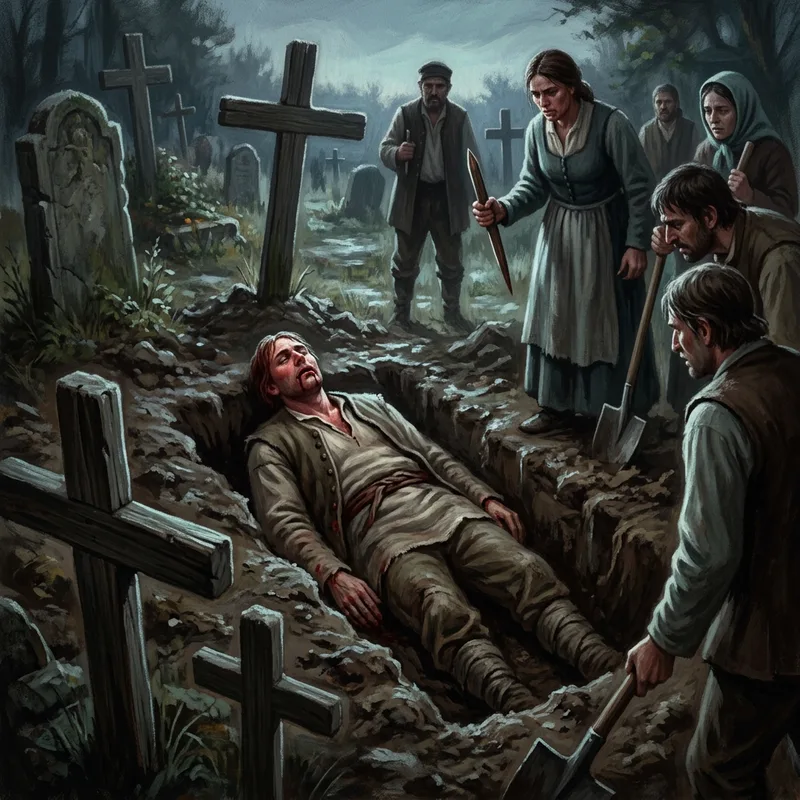
Fayl № 044 / 446
Peter Plogojowitz
Digər adı: Petar Blagojević, Петар Благојевић
Peter Plogojowitz is one of the best documented cases of a village destroying a suspected walking corpse. After a run of sudden deaths in Kisilova in 1725, the villagers forced the local Austrian administrator to witness the exhumation, staking and burning of the dead man. His report was printed in the Vienna paper Wienerisches Diarium and reprinted across Europe. Together with the Arnold Paole affair it launched the 18th-century vampire debate, and the 'signs' he described are now understood as normal decomposition.12
İlk qeydə alınıb
1725
Report by the Austrian Imperial Provisor Frombald, 1725Mənşə
Serbian
SerbiyaNə səbəb olur
Heç vaxt izah olunmayıb
The villagers gave no cause; they simply identified the dead man as the source of the deaths.Zəif nöqtələr
- a stake through the heart
- burning the body
İlk dəfə nə vaxt peyda olub?
 1725
1725Report by the Austrian Imperial Provisor Frombald, 1725
sahə qeydləri
Mənbələr nə deyir
Mənbələr
Bu səhifədəki hər fakt bu mənbələrdən götürülüb və öz sözlərimizlə yazılıb. Səhv görmüsünüz? Bizə [email protected] ünvanına yazın.
 Vampir (South Slavic)
 Arnold Paole
 Jiangshi
 Zombi (Haitian)
 Strigoi
 Abhartach
 Churel
 Nachzehrer