
 Který zombie jste?
 Souboj zombie
 Utéct jim
 Sbírka karet
 Jazyk: Čeština
 Nakrmte hordu (kasička na dýška)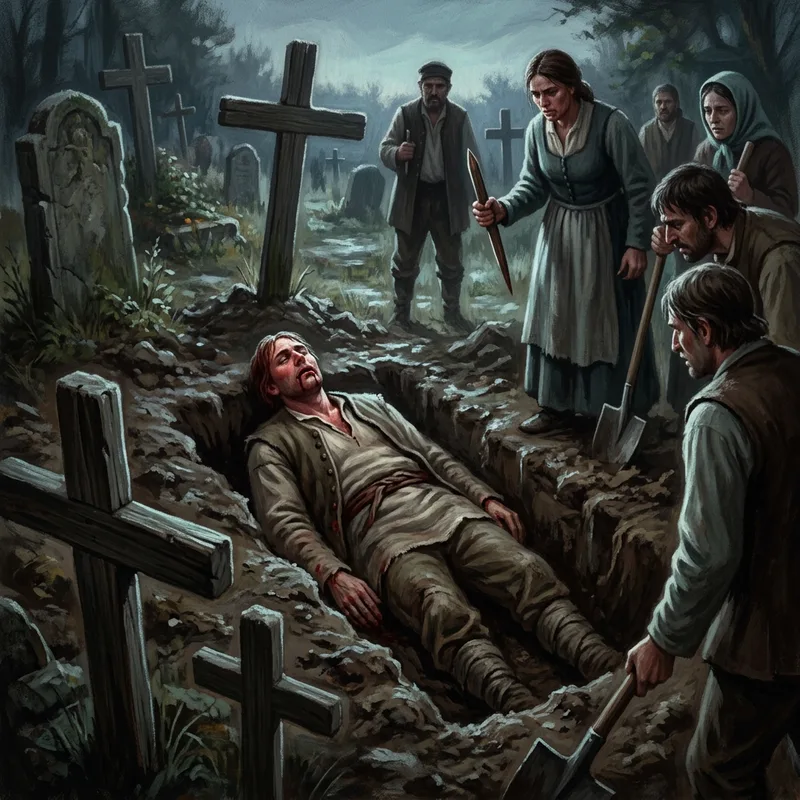
Spis č. 044 z 446
Peter Plogojowitz
Také zvaný: Petar Blagojević, Петар Благојевић
Peter Plogojowitz is one of the best documented cases of a village destroying a suspected walking corpse. After a run of sudden deaths in Kisilova in 1725, the villagers forced the local Austrian administrator to witness the exhumation, staking and burning of the dead man. His report was printed in the Vienna paper Wienerisches Diarium and reprinted across Europe. Together with the Arnold Paole affair it launched the 18th-century vampire debate, and the 'signs' he described are now understood as normal decomposition.12
První záznam
1725
Report by the Austrian Imperial Provisor Frombald, 1725Původ
Serbian
SrbskoCo ho způsobuje
Nikdy nevysvětleno
The villagers gave no cause; they simply identified the dead man as the source of the deaths.Slabá místa
- a stake through the heart
- burning the body
Kdy se poprvé objevil?
 1725
1725Report by the Austrian Imperial Provisor Frombald, 1725
terénní poznámky
Co říkají zdroje
Zdroje
Každý fakt na této stránce pochází z těchto zdrojů, napsaný našimi slovy. Všimli jste si chyby? Napište nám na [email protected].
 Vampir (South Slavic)
 Arnold Paole
 Jiangshi
 Zombi (Haitian)
 Strigoi
 Abhartach
 Churel
 Nachzehrer