
 Kamu zombi yang mana?
 Pertarungan zombi
 Salip mereka
 Koleksi kartu
 Bahasa: Bahasa Indonesia
 Beri makan gerombolan (kotak tip)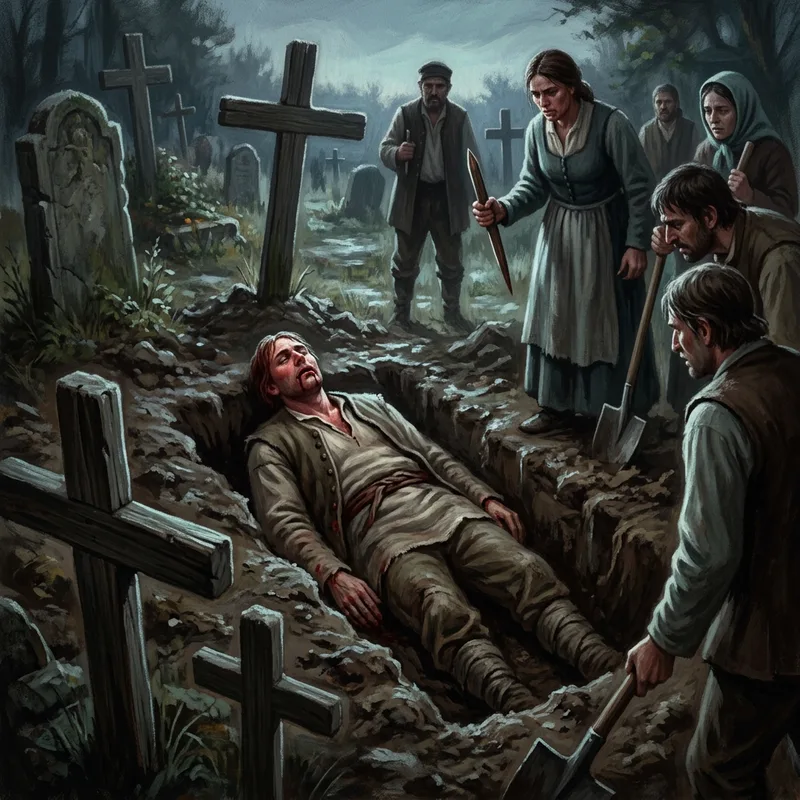
Berkas No. 044 dari 446
Peter Plogojowitz
Juga disebut: Petar Blagojević, Петар Благојевић
Peter Plogojowitz is one of the best documented cases of a village destroying a suspected walking corpse. After a run of sudden deaths in Kisilova in 1725, the villagers forced the local Austrian administrator to witness the exhumation, staking and burning of the dead man. His report was printed in the Vienna paper Wienerisches Diarium and reprinted across Europe. Together with the Arnold Paole affair it launched the 18th-century vampire debate, and the 'signs' he described are now understood as normal decomposition.12
Pertama tercatat
1725
Report by the Austrian Imperial Provisor Frombald, 1725Asal
Serbian
SerbiaPenyebabnya
Tidak pernah dijelaskan
The villagers gave no cause; they simply identified the dead man as the source of the deaths.Titik lemah
- a stake through the heart
- burning the body
Kapan pertama kali muncul?
Dunia kunoAbad Pertengahan1500 sampai 18991900 sampai 19671968 sampai 19992000 sampai 20092010 sampai sekarang 1725
1725
1725Report by the Austrian Imperial Provisor Frombald, 1725
catatan lapangan
Kata sumber
Sumber
Setiap fakta di halaman ini berasal dari sumber-sumber ini, ditulis dengan kata-kata kami sendiri. Menemukan kesalahan? Beri tahu kami di [email protected].
 Vampir (South Slavic)
 Arnold Paole
 Jiangshi
 Zombi (Haitian)
 Strigoi
 Abhartach
 Churel
 Nachzehrer