
 Welke zombie ben jij?
 Zombiegevecht
 Ren ze voorbij
 Kaartencollectie
 Taal: Nederlands
 Voer de horde (fooienpot)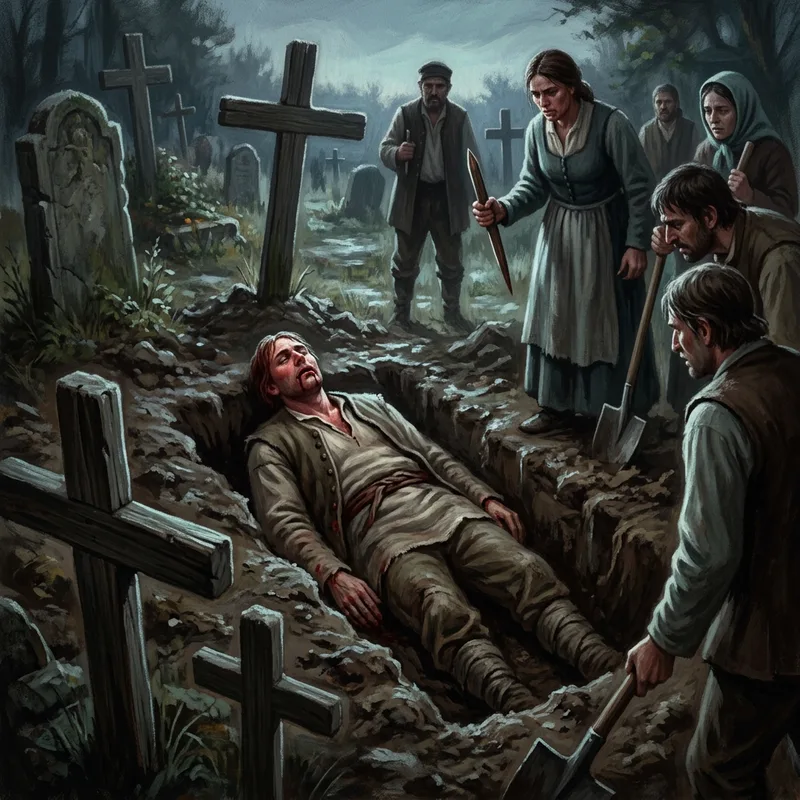
Dossier nr. 044 van 446
Peter Plogojowitz
Ook wel genoemd: Petar Blagojević, Петар Благојевић
Peter Plogojowitz is one of the best documented cases of a village destroying a suspected walking corpse. After a run of sudden deaths in Kisilova in 1725, the villagers forced the local Austrian administrator to witness the exhumation, staking and burning of the dead man. His report was printed in the Vienna paper Wienerisches Diarium and reprinted across Europe. Together with the Arnold Paole affair it launched the 18th-century vampire debate, and the 'signs' he described are now understood as normal decomposition.12
Eerst vastgelegd
1725
Report by the Austrian Imperial Provisor Frombald, 1725Herkomst
Serbian
ServiëWat het veroorzaakt
Nooit verklaard
The villagers gave no cause; they simply identified the dead man as the source of the deaths.Zwakke plekken
- a stake through the heart
- burning the body
Wanneer verscheen hij voor het eerst?
 1725
1725Report by the Austrian Imperial Provisor Frombald, 1725
veldnotities
Wat de bronnen zeggen
Bronnen
Elk feit op deze pagina komt uit deze bronnen, in eigen woorden geschreven. Een fout gezien? Mail ons op [email protected].
 Vampir (South Slavic)
 Arnold Paole
 Jiangshi
 Zombi (Haitian)
 Strigoi
 Abhartach
 Churel
 Nachzehrer