
 Який ти зомбі?
 Битва зомбі
 Утікай від них
 Колекція карток
 Мова: Українська
 Нагодуйте орду (банка для чайових)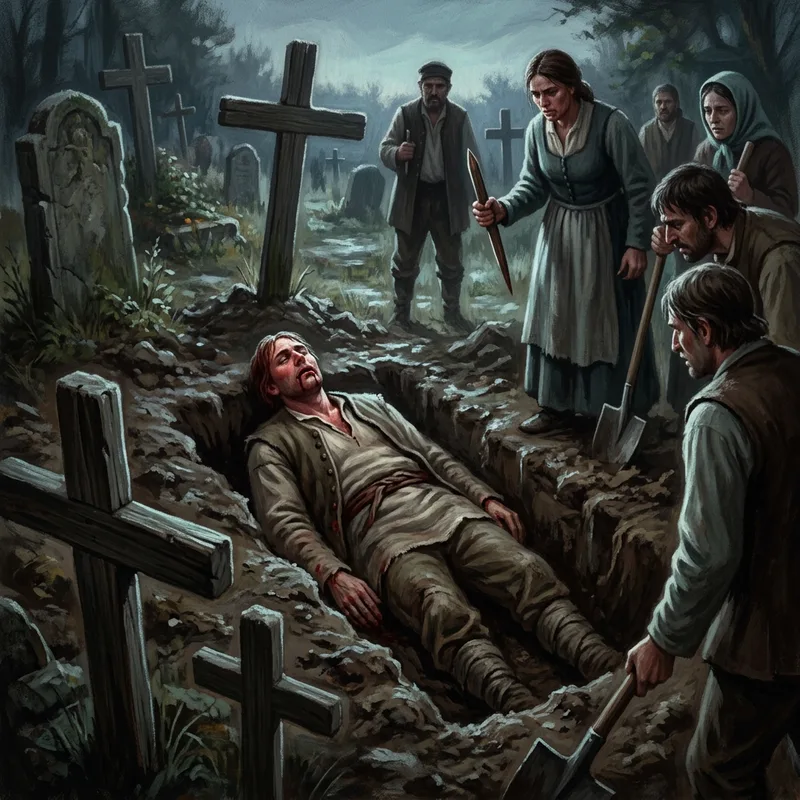
Досьє № 044 із 446
Peter Plogojowitz
Також відомий як: Petar Blagojević, Петар Благојевић
Peter Plogojowitz is one of the best documented cases of a village destroying a suspected walking corpse. After a run of sudden deaths in Kisilova in 1725, the villagers forced the local Austrian administrator to witness the exhumation, staking and burning of the dead man. His report was printed in the Vienna paper Wienerisches Diarium and reprinted across Europe. Together with the Arnold Paole affair it launched the 18th-century vampire debate, and the 'signs' he described are now understood as normal decomposition.12
Перша згадка
1725
Report by the Austrian Imperial Provisor Frombald, 1725Походження
Serbian
СербіяЩо його викликає
Ніколи не пояснюється
The villagers gave no cause; they simply identified the dead man as the source of the deaths.Слабкі місця
- a stake through the heart
- burning the body
Коли він з'явився вперше?
 1725
1725Report by the Austrian Imperial Provisor Frombald, 1725
польові нотатки
Що кажуть джерела
Джерела
Кожен факт на цій сторінці походить із цих джерел і викладений нашими словами. Помітив помилку? Напиши нам на [email protected].
 Vampir (South Slavic)
 Arnold Paole
 Jiangshi
 Zombi (Haitian)
 Strigoi
 Abhartach
 Churel
 Nachzehrer