
 Sombi wo ni ọ́?
 Ìjà sombi
 Sá fún wọn
 Àkójọ káàdì
 Èdè: Yorùbá
 Fún agbo náà ní oúnjẹ (ìgò ẹ̀bùn)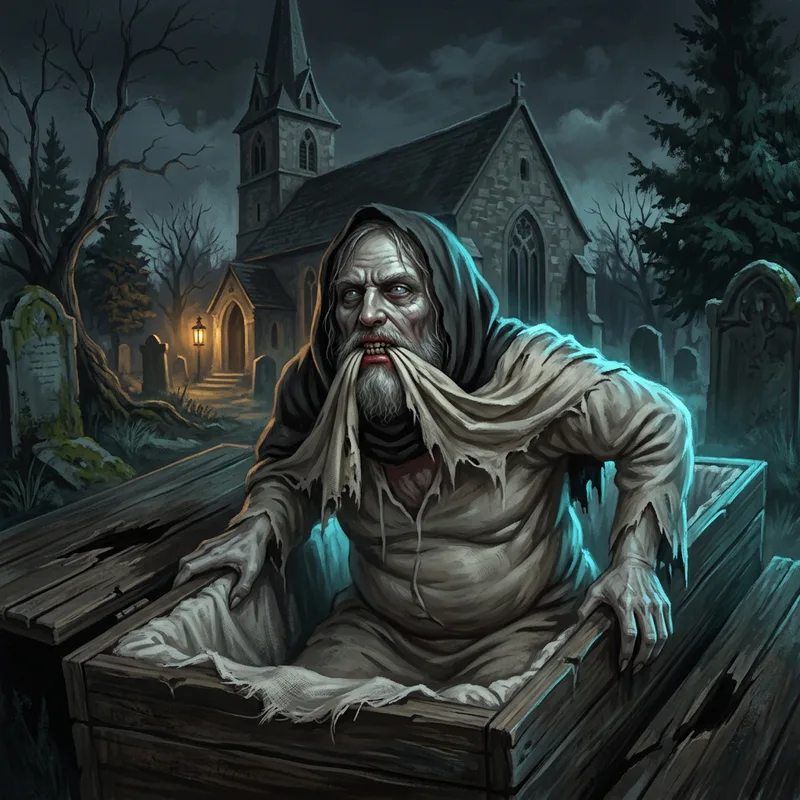
Fáìlì Nọ́ńbà 050 nínú 446
Nachzehrer
A tún ń pè é ní: Nachtzehrer, shroud eater
The Nachzehrer is the German shroud-eater, a corpse that kills without getting up. By chewing its grave clothes it was thought to drag its surviving relatives after it one by one, by malice or simply from wanting company. The belief gave communities a reason to open graves during outbreaks of disease and helped shape learned debate about the 'masticating dead' in the 18th century. It represents the stationary end of the revenant spectrum, where the corpse is dangerous but does not walk.12
Ìgbà àkọ́kọ́ tí a kọ sílẹ̀
1800
The word dates from the 19th century; the belief is several centuries olderOrírun
German
Germany, PolandOhun tó fà á
Ikú tàbí ìsìnkú búburú
Folk explanations blame mistakes at burial, such as giving the dead some of the living's own belongings.Bí o ṣe di ọ̀kan
Burying a person with grave goods taken from the living, or with their name still on the burial clothes, was thought to risk it.
Bí ó ṣe ń rìn
Kò fẹ́rẹ̀ẹ́ rìn
It need not leave the grave at all: lying there, it chews its shroud and draws the life out of its kin at a distance.Làákàyè
Làákàyè díẹ̀
Ìgbà wo ló kọ́kọ́ farahàn?
 1800
1800The word dates from the 19th century; the belief is several centuries older
àkọsílẹ̀ pápá
Ohun tí àwọn orísun sọ
Àwọn orísun
Gbogbo òtítọ́ lórí ojú ewé yìí wá láti àwọn orísun wọ̀nyí, a kọ ọ́ ní ọ̀rọ̀ tiwa. Ṣé o rí àṣìṣe? Sọ fún wa ní [email protected].
 Strzyga
 Upiór
Upiór Pień padlocked burial
 Shoemaker of Breslau
 Wiedergänger
 Aufhocker
 Jiangshi
 Zombi (Haitian)
 Strigoi
 Vampir (South Slavic)
 Abhartach
 Arnold Paole