
 Care zombi ești?
 Bătălie de zombi
 Fugi de ei
 Colecție de cărți
 Limbă: Română
 Hrănește hoarda (borcanul de bacșișuri)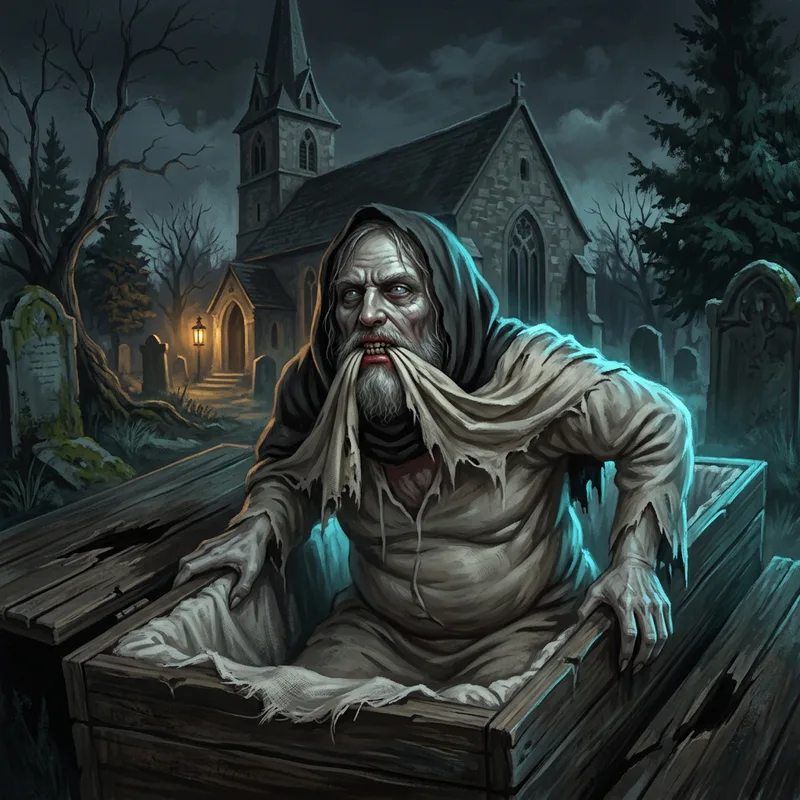
Dosarul nr. 050 din 446
Nachzehrer
Cunoscut și ca: Nachtzehrer, shroud eater
The Nachzehrer is the German shroud-eater, a corpse that kills without getting up. By chewing its grave clothes it was thought to drag its surviving relatives after it one by one, by malice or simply from wanting company. The belief gave communities a reason to open graves during outbreaks of disease and helped shape learned debate about the 'masticating dead' in the 18th century. It represents the stationary end of the revenant spectrum, where the corpse is dangerous but does not walk.12
Prima mențiune
1800
The word dates from the 19th century; the belief is several centuries olderOrigine
German
Germania, PoloniaCe o provoacă
O moarte sau o înmormântare nefericită
Folk explanations blame mistakes at burial, such as giving the dead some of the living's own belongings.Cum devii unul
Burying a person with grave goods taken from the living, or with their name still on the burial clothes, was thought to risk it.
Cum se mișcă
Abia se mișcă
It need not leave the grave at all: lying there, it chews its shroud and draws the life out of its kin at a distance.Inteligență
Ceva inteligență
Când a apărut prima dată?
 1800
1800The word dates from the 19th century; the belief is several centuries older
note de teren
Ce spun sursele
Surse
Fiecare fapt de pe această pagină provine din aceste surse, scris cu cuvintele noastre. Ai găsit o greșeală? Scrie-ne la [email protected].
 Strzyga
 Upiór
Upiór Pień padlocked burial
 Shoemaker of Breslau
 Wiedergänger
 Aufhocker
 Jiangshi
 Zombi (Haitian)
 Strigoi
 Vampir (South Slavic)
 Abhartach
 Arnold Paole